

Testing Stonecap 3.0.34 software is an essential process for ensuring system stability, performance efficiency, and secure operation. Whether you are a QA engineer, developer, or IT administrator, thorough testing of this version helps prevent failures, improve reliability, and ensure smooth deployment in real-world environments.
Stonecap 3.0.34 is designed to handle complex workflows, automation tasks, and integrated operations. Because of its advanced functionality, proper testing is required before releasing it into production systems. This guide explains how to test Stonecap 3.0.34 software effectively, using proven QA strategies and best practices.
Why Testing Stonecap 3.0.34 Software is Important
Skipping proper testing can lead to system crashes, security risks, and performance issues. Thorough testing provides the following benefits:
-
Improves software reliability
-
Reduces production errors
-
Enhances performance under heavy workloads
-
Protects systems from vulnerabilities
-
Ensures compatibility with integrated tools
-
Increases user satisfaction and trust
When testing is done correctly, organizations save time, reduce costs, and avoid emergency fixes after deployment.
Key Areas to Focus on While Testing Stonecap 3.0.34
To achieve full coverage, testing Stonecap 3.0.34 software should include multiple testing types. Each one targets a different risk area.
Functional Testing
Functional testing verifies that all Stonecap 3.0.34 features meet requirements.
What to test:
-
User interface elements and navigation
-
Workflow execution
-
Input and output validation
-
Automation task completion
-
Error messages and system responses
The goal is to ensure that every function performs exactly as intended without unexpected behavior.
Performance Testing
Stonecap 3.0.34 may process large volumes of data and automated operations. Performance testing ensures the system remains stable under load.
Key performance checks include:
-
Response time during heavy usage
-
CPU and memory consumption
-
Speed of task execution
-
System behavior under stress
-
Handling of peak workloads
Performance testing helps identify bottlenecks before they affect real users.
Compatibility Testing
Stonecap software may run across different environments, operating systems, and integrations. Compatibility testing ensures everything works together smoothly.
Test compatibility with:
-
Different operating systems
-
Various hardware configurations
-
Databases and storage systems
-
Third-party plugins or extensions
-
Network environments
This prevents environment-specific failures after deployment.
Security Testing
This is critical to protect sensitive data and system access.
Security checks should include:
-
User authentication and permissions
-
Data encryption validation
-
Vulnerability scanning
-
Protection against unauthorized access
-
Secure API integrations
Strong security testing reduces the risk of breaches and system exploitation.
Regression Testing
Whenever updates, patches, or new features are introduced, regression testing ensures existing functionality still works.
Regression testing helps:
-
Detect unintended side effects
-
Maintain system stability after updates
-
Prevent old bugs from returning
This step is essential for maintaining long-term software quality.
Step-by-Step Process for Testing Stonecap 3.0.34 Software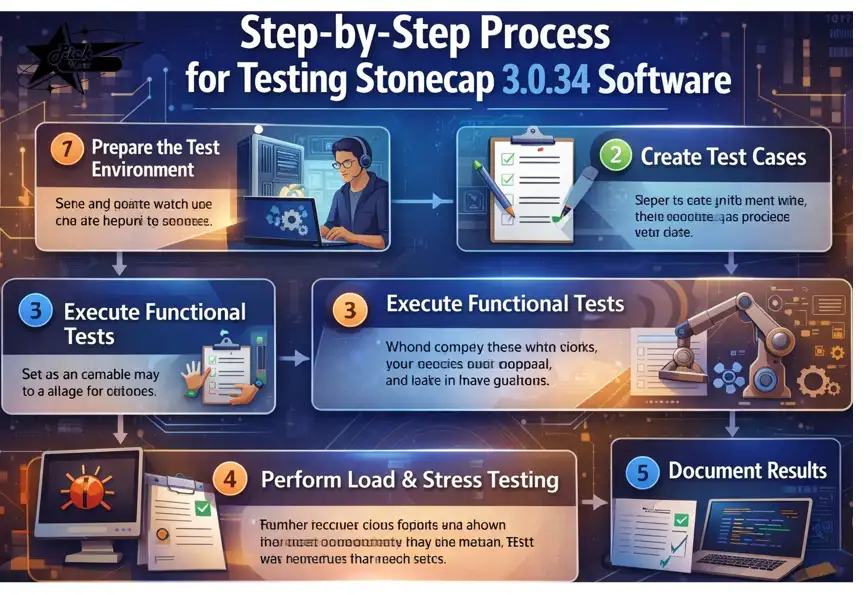
Here’s a practical workflow QA teams can follow:
Prepare the Test Environment
Set up a testing environment that mirrors the production system. Install Stonecap 3.0.34 along with all required dependencies.
Create Test Cases
Develop structured test cases covering:
-
Core features
-
Edge cases
-
Error scenarios
-
Integration workflows
Execute Functional Tests
Run manual and automated tests to confirm all features operate correctly.
Perform Load and Stress Testing
Simulate heavy workloads to evaluate performance limits and system behavior under pressure.
Conduct Security Validation
Scan for vulnerabilities and verify secure access control mechanisms.
Run Regression Test Suite
After fixes or adjustments, rerun previous test cases to ensure no new issues appear.
Document Results
Record bugs, performance metrics, and test outcomes. Clear documentation helps teams fix issues faster.
Common Issues Found During Testing
While testing Stonecap 3.0.34 software, teams often encounter:
-
Installation or configuration errors
-
Slow performance under high load
-
Integration failures with external tools
-
Permission or access control misconfigurations
-
Automation workflow interruptions
Identifying these issues early prevents serious production failures.
Best Practices for Testing Stonecap 3.0.34
To achieve the best results, follow these proven testing practices:
✔ Use both manual and automated testing
✔ Test in an environment similar to production
✔ Prioritize high-risk areas first
✔ Keep test cases updated with every release
✔ Maintain detailed bug reports
✔ Retest after every fix
✔ Monitor system logs during testing
Consistency and proper documentation are key to high-quality software testing.
Benefits of Proper Testing
When Stonecap 3.0.34 software is tested thoroughly, organizations experience:
-
Fewer system crashes
-
Better performance stability
-
Reduced maintenance costs
-
Stronger data security
-
Higher user confidence
-
Faster deployment cycles
Good testing transforms software from “working” to reliable and production-ready.
Who Should Test Stonecap 3.0.34 Software?
Testing is not limited to one role. It involves collaboration between:
-
QA Engineers
-
System Administrators
-
Security Teams
-
DevOps Engineers
A team approach ensures complete coverage from functionality to infrastructure.
Final Thoughts
Testing Stonecap 3.0.34 software is a critical step in delivering stable, secure, and high-performance systems. By combining functional testing, performance evaluation, compatibility checks, and security validation, teams can confidently deploy software that performs reliably in real-world conditions.
A structured testing strategy not only prevents failures but also improves long-term software quality and user satisfaction. If you want to read more, please visit our website.
FAQ
Q1: Why is testing Stonecap 3.0.34 necessary?
It ensures the software runs smoothly, securely, and efficiently before deployment.
Q2: What is the most important type of testing?
All are important, but performance and security testing are especially critical for stability and protection.
Q3: Can testing be automated?
Yes, automation helps speed up regression and performance testing.
Q4: How long should testing take?
It depends on system complexity, but thorough testing should never be rushed.